Home > Lithium bis(fluorosulfony)imide(LiFSI)
  • Lithium bis(fluorosulfony)imide(LiFSI)
Lithium bis(fluorosulfony)imide(LiFSI)

Lithium bis(fluorosulfony)imide(LiFSI)

Lithium bis(fluorosulfony)imide

Synonyms:LiFSI; Lithium bis(fluorosulfonyl)amide; Imidodisulfuryl fluoride, lithium salt

CAS No.:171611-11-3

EINECS No.686-526-7

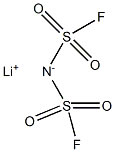
Molecular FormulaF2NO4S2.Li

Molecular Weight:187.06

Structure Formula
                                

Standard

Items

Specifications

Appearance

White or off white powder

Purity ≥99.9%
Free acid (as HF) 100ppm

Water (K.F.)

100ppm

Floride (F-) ≤50ppm

Sulfate (SO42-)

≤50ppm

Chloride (Cl-)

≤10ppm

Fe

≤2ppm

K

≤5ppm

Na

≤10ppm

Ca

≤2ppm


Properties
Lithium bis(fluorosulfonyl)imide is a white crystalline powder or granular solid. Density: 2.38 g/cm³ (25℃). Melting point: 145-150℃. Decomposition temperature > 200℃ with excellent thermal stability. It has strong hygroscopicity (easily reacts with moisture in the air to form lumps), no volatility, non-flammable and non-explosive, but corrosive (avoid contact with aluminum and metal oxides). Highly soluble in lithium battery common organic solvents such as dimethyl carbonate (DMC) and ethylene carbonate (EC), as well as water. The ionic conductivity of 1.0M LiFSI/EC-DMC (1:1) electrolyte reaches 12-14 mS/cm at 25℃ (higher than traditional LiPF₆ electrolytes).

ApplicationsLithium Bis(fluorosulfonyl)imide (LiFSI) is a core functional material in the lithium battery electrolyte field. With high ionic conductivity, excellent thermal stability, and good electrochemical compatibility, it is widely used in various battery systems and boasts diverse industrial application values. Its key applications are as follows:

1.  Lithium-ion Battery Electrolyte Additive (Mainstream Application)

As a critical additive for lithium battery electrolytes, LiFSI effectively reduces the high and low-temperature resistance of the SEI film on the electrode surface, minimizes capacity loss during battery storage, and significantly improves battery capacity and overall electrochemical performance. When compounded with LiBOB, it synergistically exerts advantages: LiBOB inhibits the corrosion of aluminum current collectors by LiFSI, while LiFSI reduces the high impedance of LiBOB, greatly optimizing the rate performance and cycle stability of lithium-ion batteries. Additionally, it enhances electrolyte ionic conductivity, improves fast-charging efficiency, and boosts discharge capacity and power in low-temperature environments (-20℃ to -40℃). It also suppresses the high-temperature decomposition of main salts, reduces hydrofluoric acid generation, is compatible with mainstream battery systems such as lithium iron phosphate (LFP), and enhances battery storage and cycle reliability.

2. High-end Battery Electrolyte Main Salt (High-voltage & High-power Scenarios)

With the addition of corrosion inhibitors, LiFSI can be used as a main salt (concentration > 1.0M) in high-end battery systems. It is compatible with high-voltage cathode materials such as NMC811, forming a stable CEI layer, and alleviates the volume expansion of silicon-based anodes during charging and discharging. Suitable for scenarios requiring high performance such as electric vehicle power batteries and high-end fast-charging digital product batteries, it is a core material for achieving 800V high-voltage fast charging and improving battery high-temperature safety.

3. Key Electrolyte for Advanced Batteries (Next-generation Battery Technology)

LiFSI is a core candidate electrolyte for next-generation advanced batteries such as solid-state batteries, lithium-sulfur batteries, and lithium-metal batteries. It is compatible with high-voltage energy storage devices above 4.2V, stabilizes lithium-metal battery anodes, and inhibits lithium dendrite growth. In polymer solid-state batteries, its excellent solubility provides sufficient lithium ions for the system, improving the ionic conductivity of solid electrolytes and facilitating the commercialization of advanced battery technologies.

4. Functional Material for Diversified Industrial Fields

Beyond the battery sector, LiFSI can be used as an electrolyte for primary batteries to ensure stable discharge performance. It also serves as a catalyst for polymerization reactions, promoting organic fluorination reactions at lower temperatures and improving reaction selectivity. Additionally, it functions as an industrial antistatic agent, achieving efficient antistatic effects by regulating surface charge distribution, and is suitable for industrial production needs across multiple industries.

Storage:Keep in a well-closed container. Store in a cool, dry and well-ventilated place. The recommend storage temperature is below 35℃.

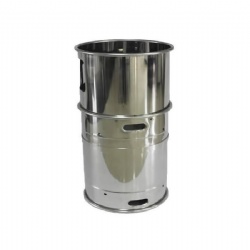
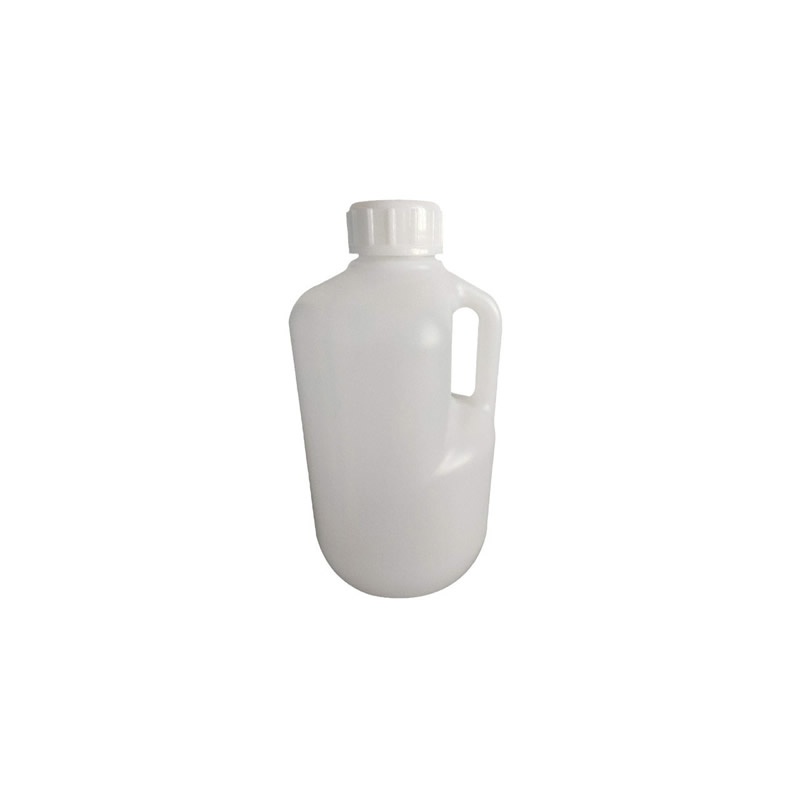
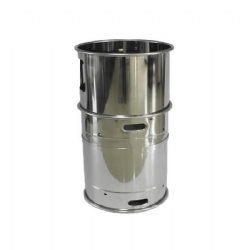
Packing:5kg HDEP bottle, 80kg stainless steel drum

Contact Us

Tel: +86-561-3306168 / 3308168

Fax: +86-561-3308168

Mobile: 13905616951

E-mail: [email protected]

Add: No.20, Wutong Middle Road, Longhu Industrial Park, Economic Development Zone, Huaibei, Anhui, China.

facebook: https://www.facebook.com/profile.php?id=100077019117173 sales@meisenbaochem.com
WechatClose
Wechat